Steam can explain why a working setup still underperforms
- Early loops can function while still bleeding efficiency
- Steam raises questions about enclosure and reuse
- It connects directly to water discipline and broader optimization
Steam turns a visible process into a routing problem. Steam that escapes a local enclosure stops helping that machine immediately, even though some of it may later condense back into rain elsewhere in the world.
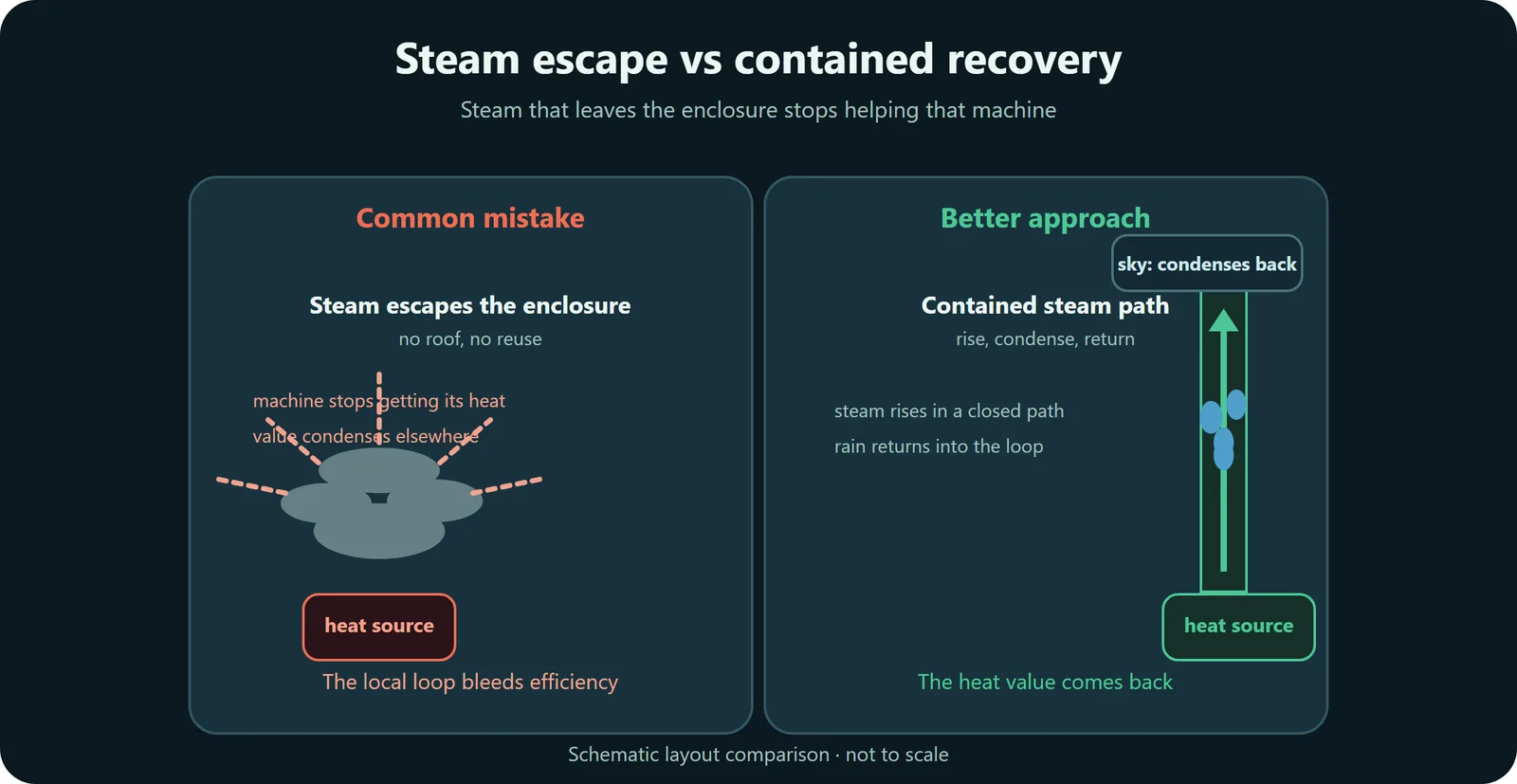
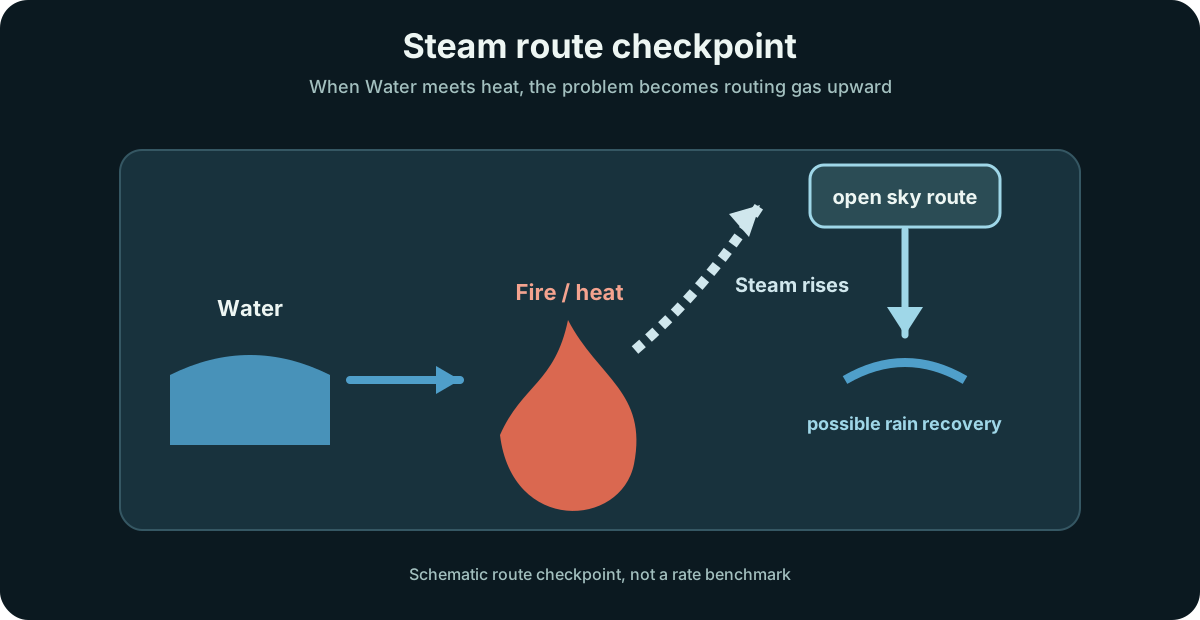
Steam can bleed out wherever it is under-condensed or left uncontained. A factory may keep running while part of that value does not make it back into the local loop.
Steam problems often begin as water-discipline problems. Checking the earlier water loop is one of the better ways to explain why later efficiency keeps slipping.
Weak output can come from Steam escaping before you reuse it, but it can also come from poor heating, blocked flow, or bad spacing. Locating where Steam leaves the working area is still one of the first checks worth making.
Once steam enters the picture, enclosure, spacing, and route planning start to matter more than they did in the rough early setup.
Steam is a real phase in the Water loop, not a decorative effect. When useful Water turns into Steam and escapes the local setup, the line can lose value even if some of that moisture later returns elsewhere as rain.
The best enclosure, exact recovery rate, and whether Steam loss matters enough to fix first still depend on route length, nearby heat, and how tightly the setup is sealed. rate of every steam chamber, or that all weak output is caused by Steam loss. It is a routing and containment reference, not a benchmark sheet.
Because once Water becomes Steam, the problem changes from liquid containment to gas routing. Escaping Steam stops helping the local machine immediately.
No. Steam can later condense back into rain, but that does not mean the value stays inside the local loop where you needed it.
Inspect the Water route and enclosure before changing machine count. Many Steam issues begin with poor liquid discipline upstream.
Steam that escapes its enclosure stops helping the machine, so containment belongs in the layout before heat is added.
Source note: Use the linked source for the underlying reference. Early Access details can change.
Official source