Water is both a material and a routing problem
Early production needs Water, but Water also moves under physics. A factory can have “enough” Water overall and still fail because the Water never reaches the place where Sand or Seeds need it.
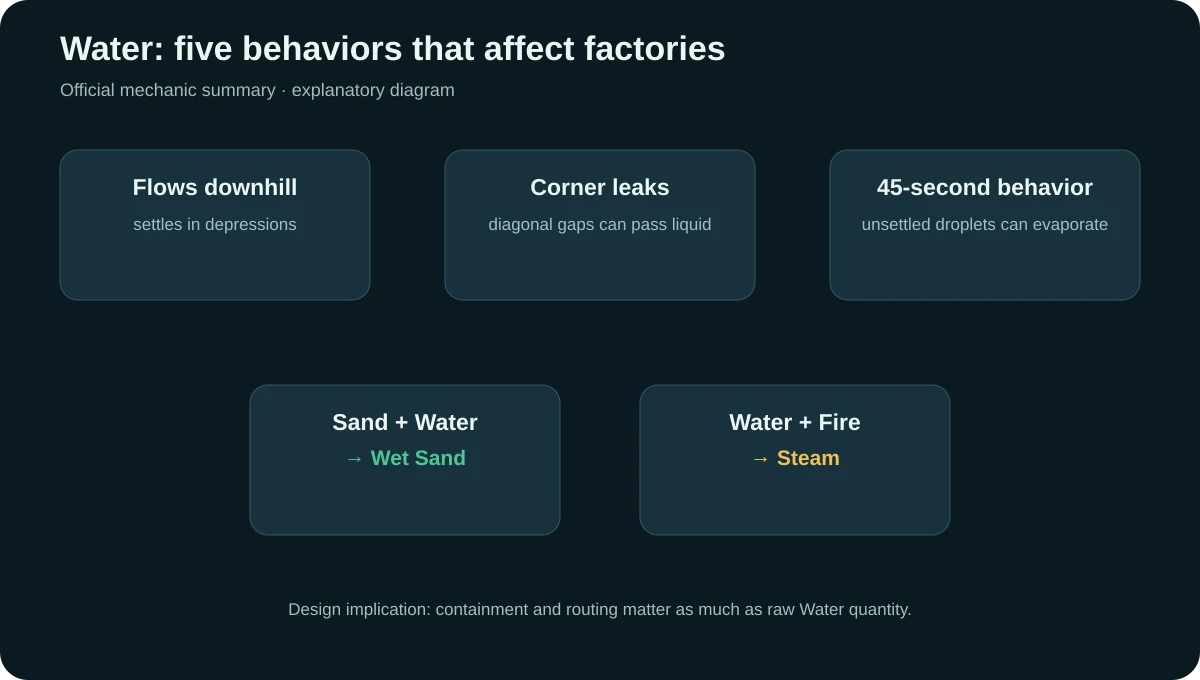
Quick answer: Water flows downhill and settles in depressions, can slip through diagonal block corners, turns Sand into Wet Sand on contact, and becomes Steam when it meets Fire. A loose droplet that does not find a depression within 45 seconds can evaporate into the rain buffer.
Early production needs Water, but Water also moves under physics. A factory can have “enough” Water overall and still fail because the Water never reaches the place where Sand or Seeds need it.
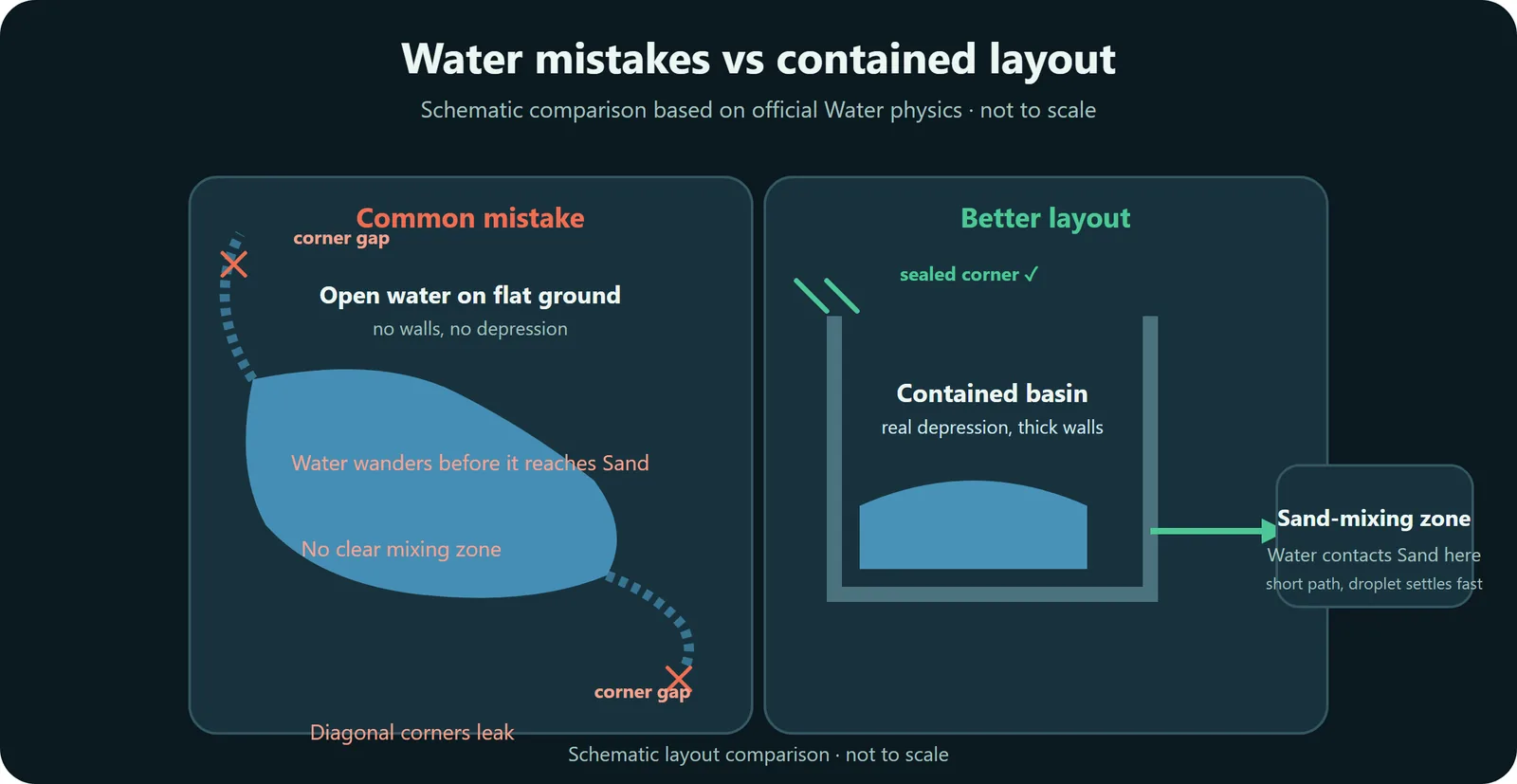
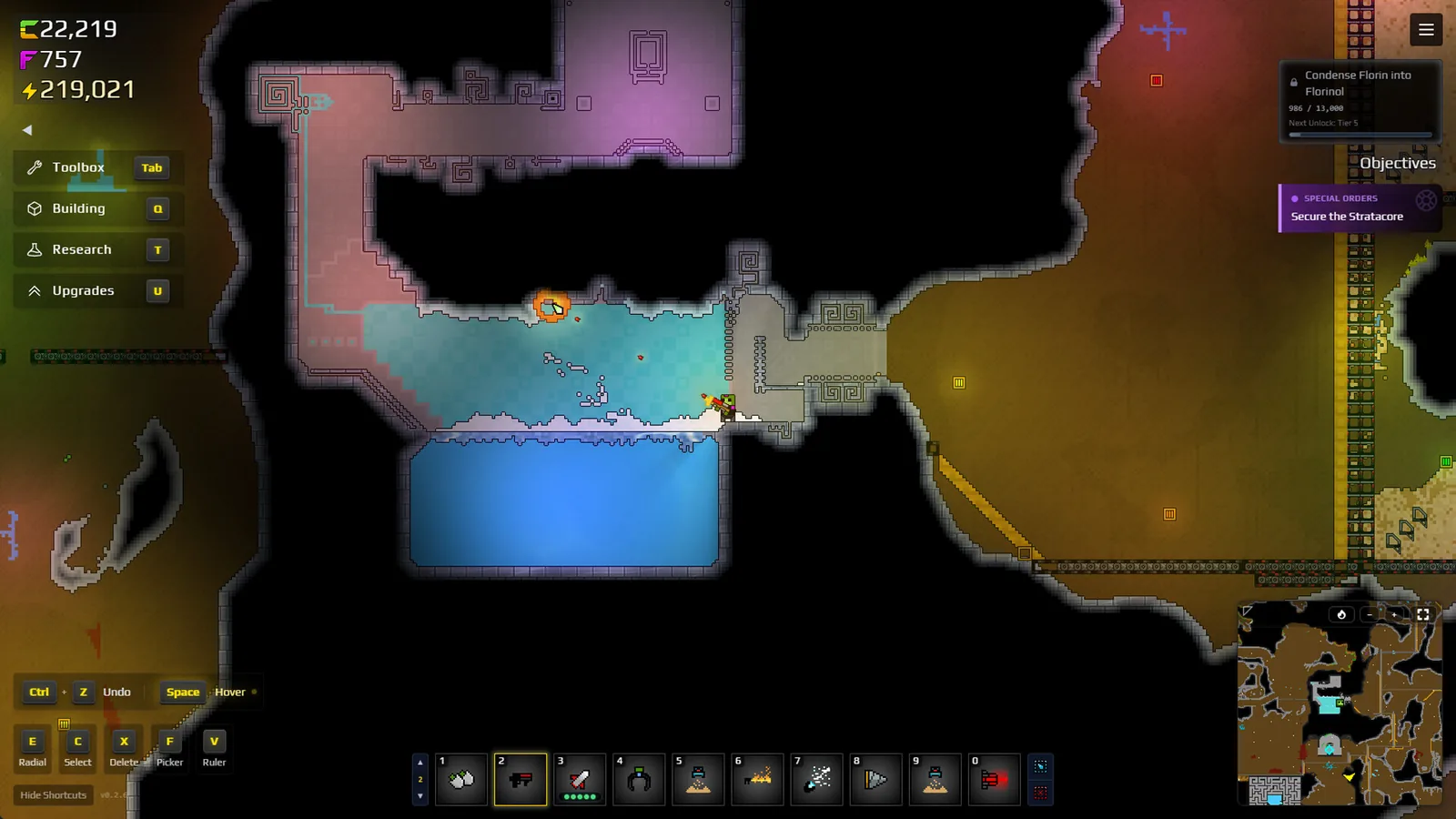
Start with visible Water that can settle. If it is moving across a flat surface, solve containment before routing.
Checkpoint: Water sits in a basin instead of wandering through the build area.
Pipes, pumps and vents help move Water, but the early question is simpler: can Water reach Sand without escaping?
Checkpoint: the route is short enough to inspect from source to mixing zone.
The production line should receive Wet Sand, not a guess that dry Sand will become wet somewhere inside the machine area.
Checkpoint: Wet Sand forms before it reaches the Shaker input.
When Fire changes Water into Steam, the problem has moved from liquid containment to gas movement and recovery.
Checkpoint: you can identify whether Water is lost to routing, evaporation or Steam conversion.
Standard Filters allow Water to pass. Advanced Filters can be configured to block or pass Water.
Loose pixels can skitter while searching for a depression; if they do not settle within the official timeout, they evaporate.
First check whether the Water is actually contacting Sand to create Wet Sand. A routing problem can look like a supply problem.
Steam rises and can condense as rain after reaching the sky, so heat changes the route rather than simply deleting Water.
Keep the basin-and-mixing setup while the Wet Sand line stays readable. When you start routing Steam or scale up the same layout, the goal shifts from keeping Water to directing its movement, and it is usually a good point to plan the new route before Water keeps escaping.
Water is part of the factory, not background scenery. It flows downhill, leaks through bad corner geometry, converts Sand into Wet Sand, and becomes Steam when it meets Fire. Stable Water handling comes from treating flow direction and terrain shape as part of the build.
Basin shape, Pump count, and long-route stability still depend on terrain and factory scale. Use the rules here to keep Water visible and reliable before you optimize output.
The most common reasons are wandering across flat ground, leaking through corners, or turning into Steam before it reaches the useful mixing zone.
Its first major job is turning Sand into Wet Sand, which then feeds the opening Gold loop through the Shaker chain.
Because visible volume is not the same as useful routing. If Water never settles, never contacts Sand, or escapes into Steam, the line still starves.
Source note: Based on the linked official source. Early Access mechanics and values can change.
Official source