Sand + Water -> Wet Sand -> Shaker
Keep this chain readable before trying to make the factory larger.
Direct answer: Wet Sand forms when Sand absorbs Water. In the early loop, it is the material you feed into Shakers, which always create Residue and can drop Gold.
Keep this chain readable before trying to make the factory larger.
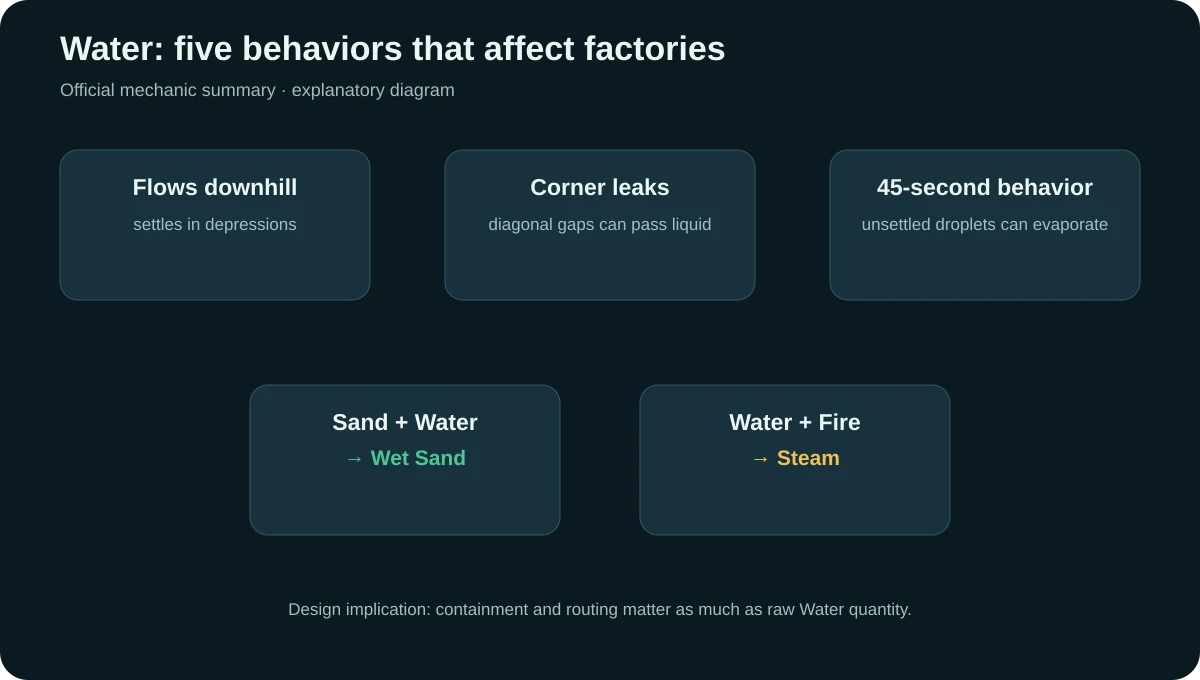
The video helps illustrate the feel of Sandustry's physics. Use the written sections for the actual Wet Sand checklist.
Open on YouTubeWet Sand matters because it turns a loose environment interaction into a production input. Once Sand becomes Wet Sand, your factory can route it toward Shakers instead of treating Water as a side effect.
Route Water so Sand can absorb it without flooding or disappearing from view.
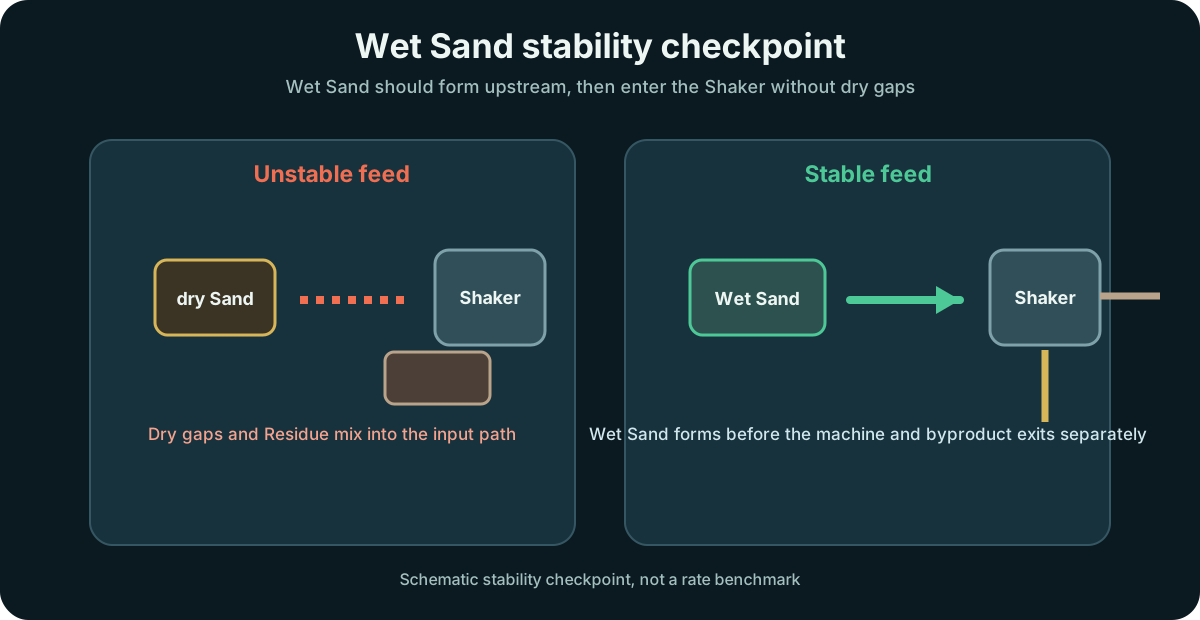
Keep the Wet Sand path separate from the byproduct path so fresh input does not get buried.
Shaker output is probabilistic for Gold, so diagnose flow over time instead of judging a single moment.
Residue is guaranteed from Shaker processing. If it piles up near the input, the Wet Sand loop can look broken even when the machine works.
The wetting area is inconsistent. Re-check Water source, direction and visible containment.
The input path is blocked or mixed with output. Separate fresh material from Residue.
That can be normal variance. Confirm the Shaker is consuming Wet Sand and producing Residue before rebuilding.
The loop probably became less readable. Shrink the diagnosis to Water, Wet Sand input, Shaker area and output exit.
The Sand and Water interaction, the Wet Sand role, and Shaker output behavior are sourced from official game references. The layout advice is practical guidance for readability and troubleshooting, not an official layout ranking or a rate benchmark.
The single wetting-area setup is enough while one Shaker keeps the loop readable. When you want more Gold from the same idea, scale the proven cell instead of building a second unproven one. Once the physical loop is stable, plan this production chain with ratios you have verified in your current save.
Wet Sand is the handoff between Water control and early Gold production. It forms when Sand touches Water, and it is the material your first Shaker line actually needs to stay fed.
Shaker count, final Gold rate, and the cleanest byproduct layout still vary with terrain, routing, and how steadily the Wet Sand lane stays supplied.
Its key early use is feeding the Shaker. Without stable Wet Sand, the first Gold line does not have a reliable input.
Usually because Water is inconsistent, the wetting area is unstable, or fresh input is crossing into Residue and output space.
Flow first. If the Shaker is consuming Wet Sand and producing Residue, short-term Gold variance alone is not a reason to rebuild the line.
Source note: Based on the linked official source. Early Access mechanics and values can change.
Official source