Compact enough to fit, open enough to read
Keep the official Shaker flow intact, but leave enough room to see where Wet Sand, Gold, and Residue are actually going before you add more throughput.
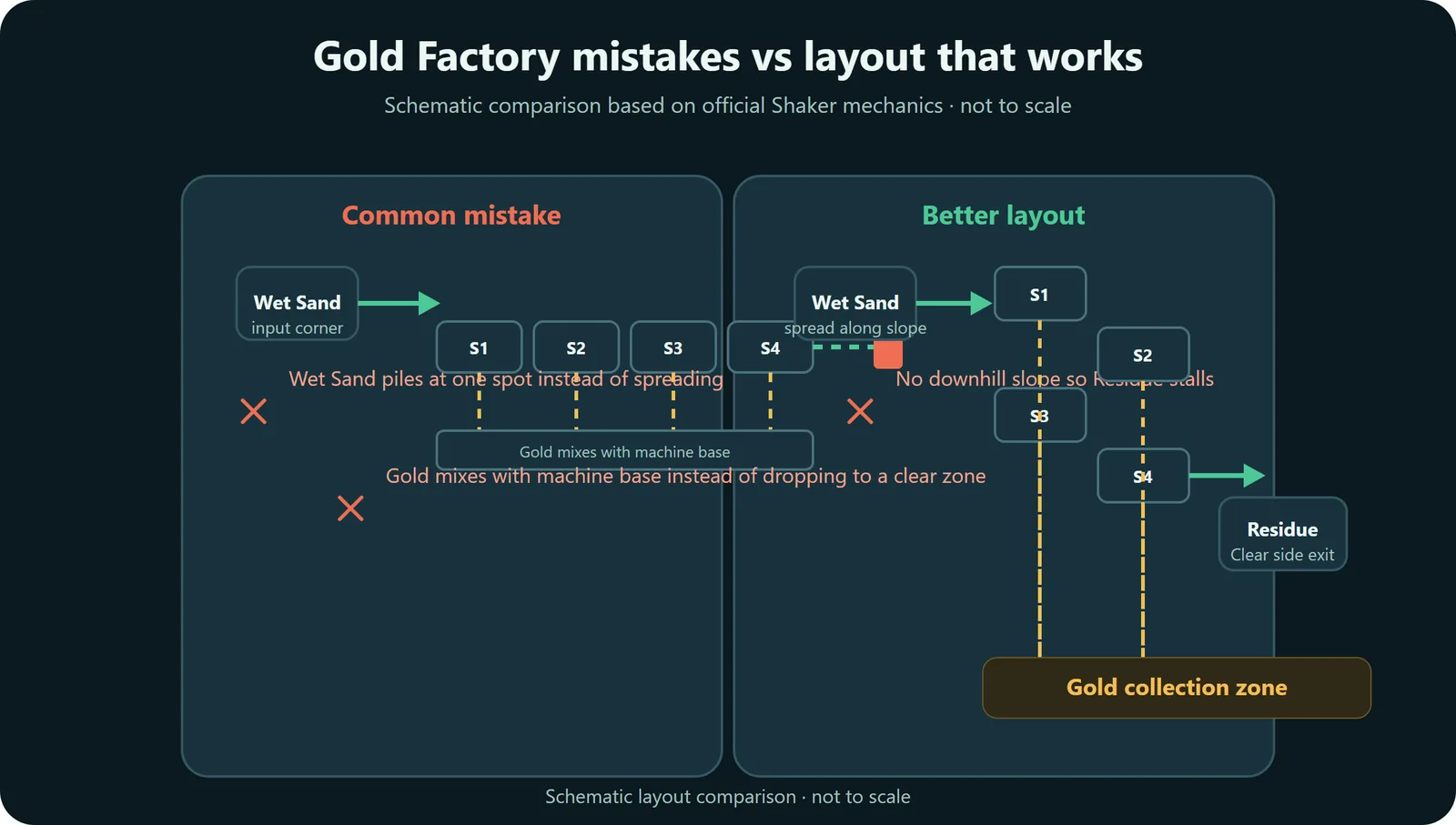
Layout concept: use a short descending Shaker staircase, keep Wet Sand input on the high side, leave Gold drop space below and give Residue a side exit.
Keep the official Shaker flow intact, but leave enough room to see where Wet Sand, Gold, and Residue are actually going before you add more throughput.
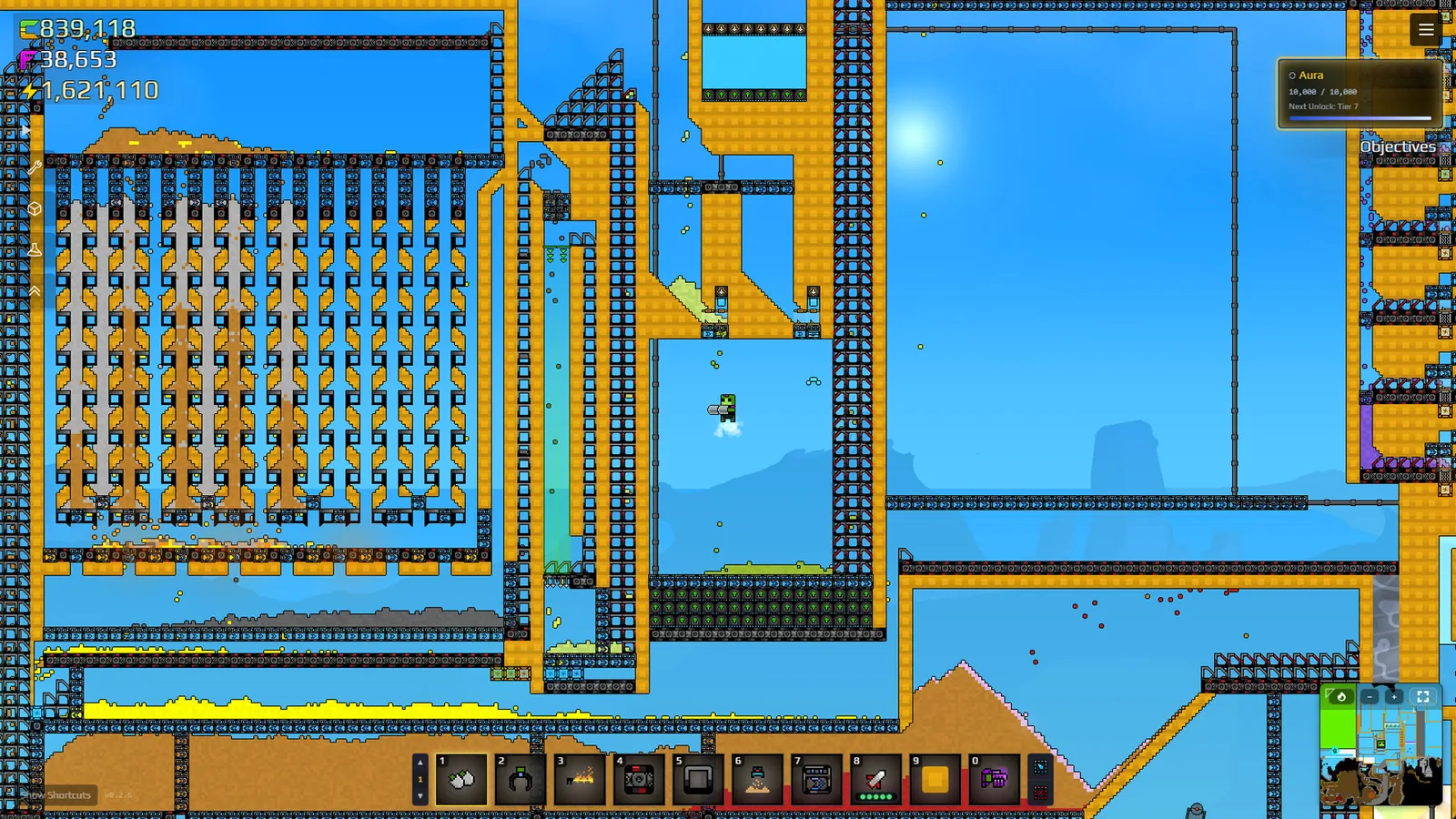
| Goal | Small early Gold line that stays inspectable. |
| Difficulty | Beginner compact. |
| Requires | Wet Sand input, Shaker, open Gold drop space. |
Keep the high side free for Wet Sand and the low side free for Residue movement.
Do not pack another machine directly under the drop area.
A compact line becomes unreadable quickly if input arrives faster than byproduct can leave.
A small Gold line only stays stable when Wet Sand input, Gold drop space, and Residue exit are kept visibly separate. Compact means readable, not fully packed.
The exact tile count, machine count, and output pace still depend on the map and how much room you leave for cleanup and collection.
A good compact answer is a short descending Shaker staircase with one clear Wet Sand side, open Gold drop space below, and a separate Residue exit. Compact does not mean packing every tile.
Small lines fail fast because Wet Sand input, Gold output, and Residue movement start competing for the same tiles. In a compact build, separation matters more than squeezing in another machine.
Source note: This recommendation is source-based, not an independently benchmarked build.
Official source