S Sandustry Tips
Base material

Sandustry Sand: Why It Becomes the First Production Bottleneck

Sand is easy to collect but easy to misuse. Your first real bottleneck is not finding more Dirt; it is turning Sand into Wet Sand at a steady rate before the Shaker starves or receives dry input.

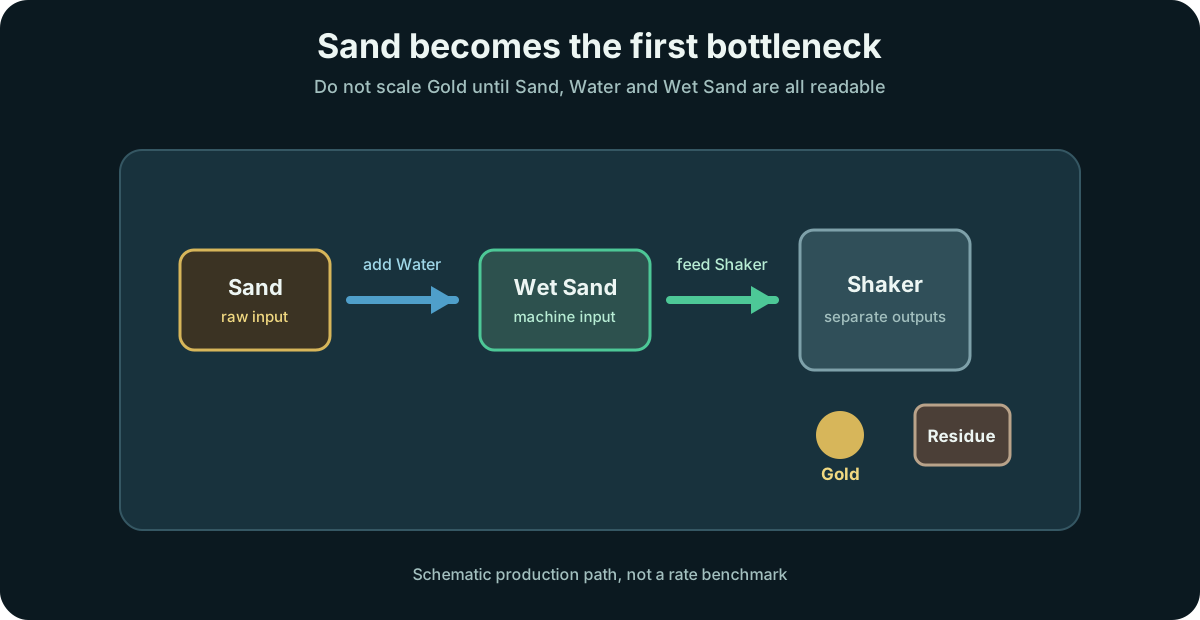
Dropped by Dirt 1 Sand + 1 Water = 2 Wet Sand Water doubles it
At a glance

Sand quick facts

  • Falls out of Dirt blocks when you destroy them
  • One Sand pixel meeting one Water pixel produces two Wet Sand pixels
  • Density 150, classified as a solid
  • Cannot be burned, but can be wetted and launched

Where Sand Fits in the Chain

Sand is the only early material that sits at the exact midpoint between "free terrain" and "factory input". Everything before it is digging; everything after it is processing.

Source

Dig Dirt, don't hunt for Sand

There is no sand deposit to search for. Sand arrives as the drop when Dirt breaks apart, so your Sand supply is limited only by how much ground you are willing to clear.

Conversion

Water is the multiplier

One Sand plus one Water turns into two Wet Sand. That doubling is why a steady water supply matters more than a bigger shovel — water literally doubles your raw material before it ever reaches a machine.

Destination

Wet Sand feeds the Shaker

The moment Sand becomes Wet Sand it qualifies for the Shaker, where each pixel always leaves Residue and has a 1-in-4 chance of dropping Gold through the machine.

Physics

Wettable but not flammable

Sand absorbs water on contact yet refuses to burn, which makes it one of the few solids safe to route near both your reservoir and your furnace areas. It can also be launched, so Launchers move it like any other solid.
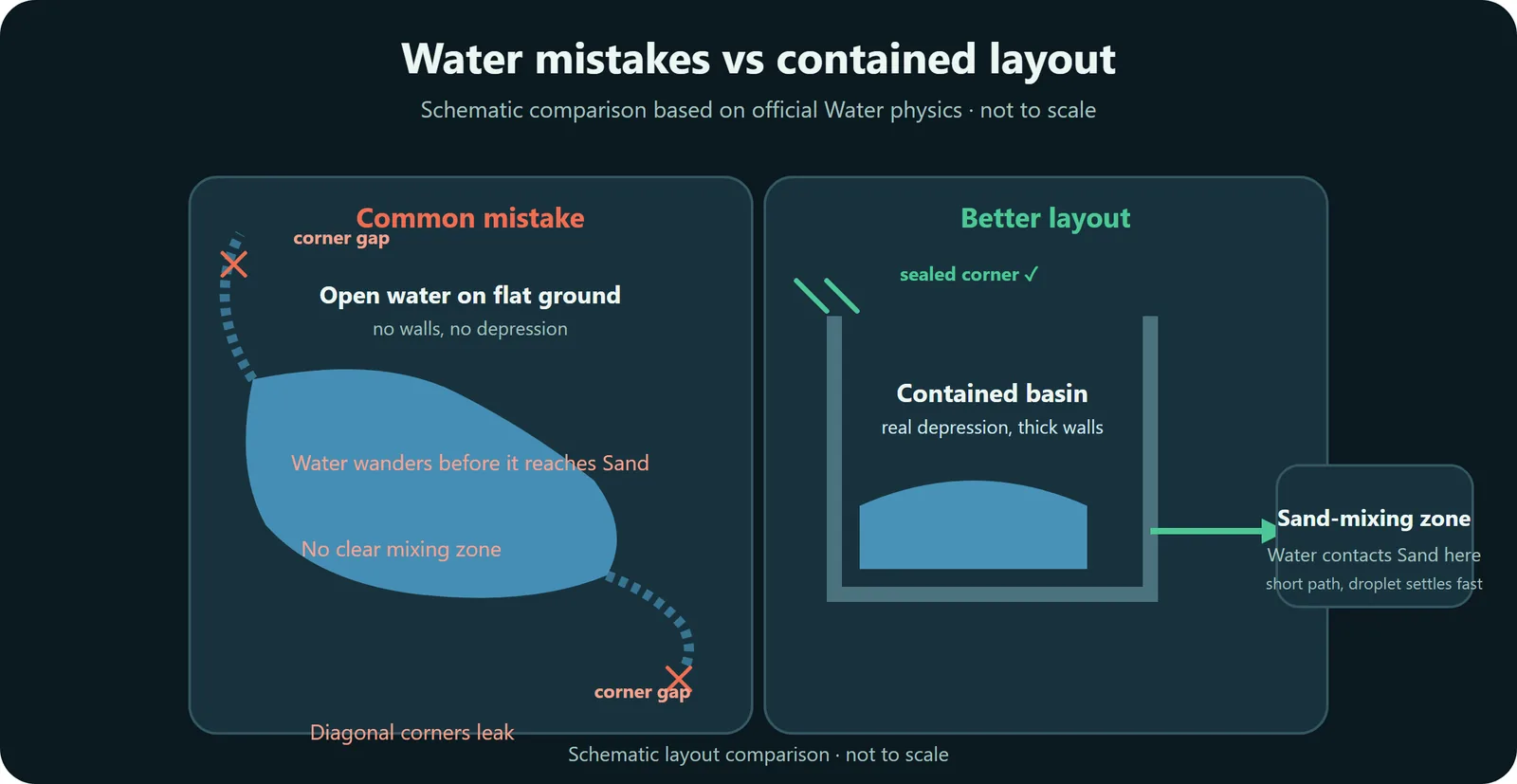
Sandustry Wet Sand production diagram showing Sand meeting Water before the Shaker input
Sand becomes useful for Gold only after Water reaches it. Keep the mixing point before the Shaker, not after it.
Sandustry Sand production path diagram showing Sand plus Water becoming Wet Sand, then Shaker processing into Gold and Residue
Sand checkpoint: the bottleneck is usually conversion and delivery, not raw Sand availability.

Diagnose the Sand Bottleneck

Before you dig more, check whether the Sand you already have is being converted and delivered correctly.

Dry Sand piling before the Shaker means the Water contact point is missing or too late.
Wet Sand forming but not moving means transport, slope or belt direction needs attention.
Wet Sand reaches the Shaker but no Gold appears yet may simply be the 1-in-4 Gold chance.
Residue covering the input means the Shaker output path is the bottleneck, not Sand supply.
Yield math

From Dirt to Gold

  • 1 Dirt destroyed drops Sand
  • 1 Sand + 1 Water becomes 2 Wet Sand
  • Each Wet Sand: 1 Residue always, Gold one time in four
  • End to end, roughly 4 Sand becomes 1 Gold
Common mistake

Feeding dry Sand to machines

The Shaker ignores dry Sand entirely. If your Gold line stalls with raw piling up, the first fix to test is routing water into the supply before it reaches the machines, not after.

Core Sand role

  • Sand is the early material that must be converted into Wet Sand before Shaker production works.
  • Water doubles Sand into Wet Sand, so stable water routing is part of Sand throughput.
  • The first real Sand bottleneck is usually conversion and delivery, not raw terrain supply.

What still varies by terrain and version

  • Gold output still depends on how steadily Sand reaches the Wet Sand step, not on one universal rate target.
  • Dig path, elevation, and handoff distance change how efficient a Sand lane feels in practice.
  • Early Access patches can change conversion details, so treat exact ratios as version-sensitive.

Featured Questions

How do you get Sand?

You get it by destroying Dirt, not by finding a separate early Sand vein.

Why is my Sand line making no Gold?

The usual reason is that dry Sand is reaching the Shaker instead of Wet Sand, or the Shaker output path is blocked.

Why does Water matter more than digging speed?

Because one Sand plus one Water becomes two Wet Sand, so water routing literally multiplies the material before processing.

Next step

Turn Sand into a working production chain with Wet Sand Mechanics, then copy the early structure from First Factory.

Source note: Use the linked source for the underlying reference. Early Access details can change.

Official source